
Alan Kay, well known computer researcher, once said, “Individuals who are truly genuine approximately computer program ought to make their claim equipment.” I’d contend that’s as genuine nowadays as it was in 1982 when he said it. In any case, what’s changed between at that point and presently is that equipment has gotten quicker, littler, and most critically: cheaper. it’s presently conceivable to purchase a full computer for $5.
With huge companies driving down costs for their claim items, it’s developed a fabricating biological system competent of creating production-grade equipment that’s cheap sufficient and available sufficient that it is presently inside reach of ordinary people. This openness and reasonableness are making a difference drive things like crowdfunding and the creator development, but they’re moreover giving way to more people being able to take part in open source through open source hardware.
There’s a few lovely huge contrasts in what is or isn’t open source equipment, but the Open Source Equipment Affiliation (OSHWA) has a definition that most people concur with, and if you’re recognizable with open source computer program this shouldn’t sound as well weird:
“Open source equipment (OSHW) is a term for unmistakable artifacts—machines, gadgets, or other physical things—whose plan has been discharged to the open in such a way that anybody can make, adjust, disperse, and utilize those things.”
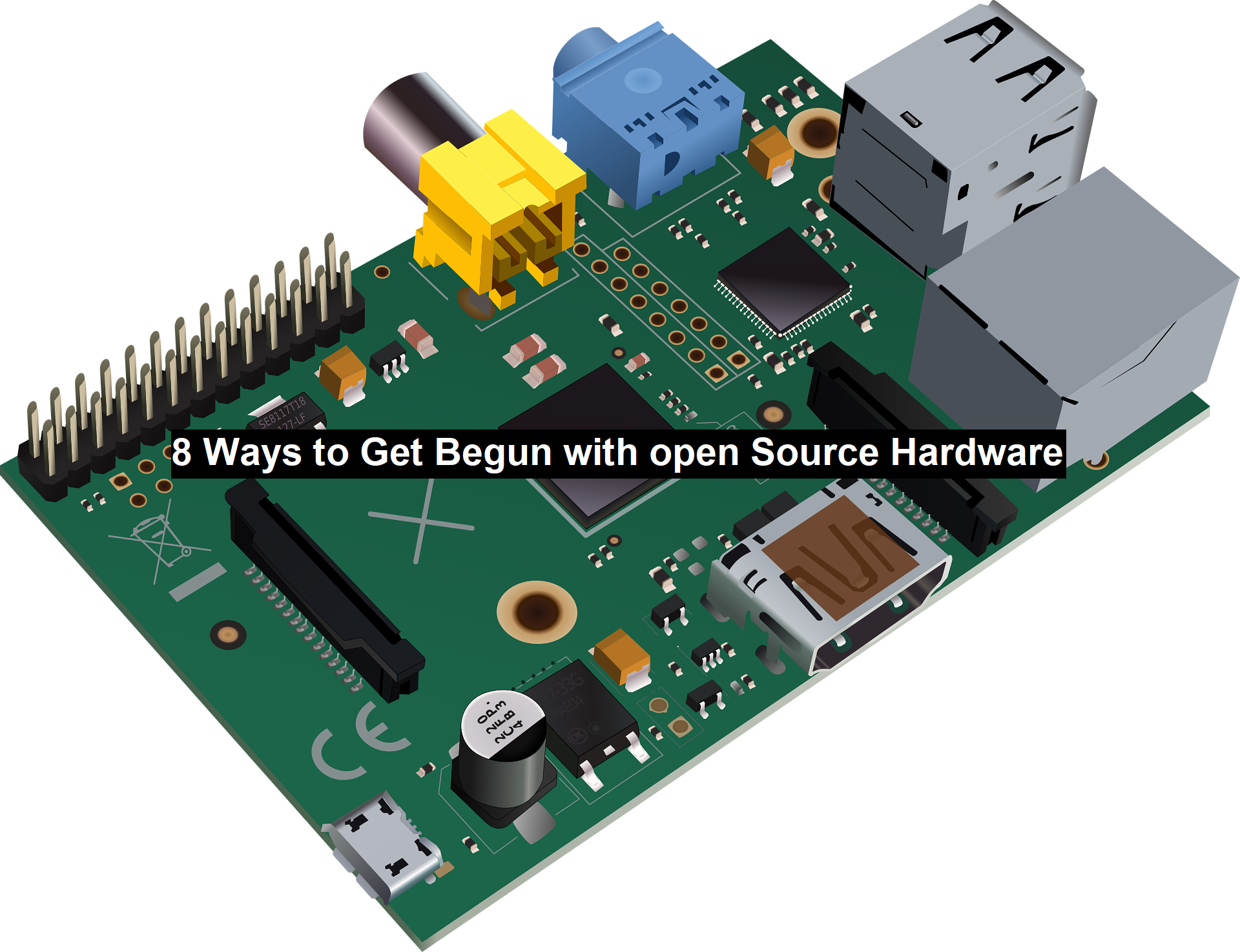
There’s parts of open source equipment around; you may not have taken note the sheets you as of now utilize may, in truth, be open equipment. From the humble but ever flexible Arduino and all the way up through full computers like the BeagleBone family and the C.H.I.P. computer, there are parts of illustrations of open equipment around, and more plans are being made all the time.
Hardware can be complicated, and in some cases non-obvious to apprentices why a plan needs something. But open source equipment gives you the capacity to not as it were see working cases, but too the capacity to alter those plans or strike off and imitate the pieces you require in your possess plans, and it might be as straightforward as duplicate and paste.
How can I get started?
Let’s begin off by indicating out that equipment is difficult, it’s complicated, in some cases exclusive, and the devices you may be utilizing are not continuously the most user-friendly. It’s moreover more than likely, as anybody who’s played around with a microcontroller long sufficient can verify: you are going to sear something and let the enchantment smoke out at a few point. It’s alright, we’ve all done it, a few of us more than once since we didn’t learn the lesson the to begin with 100 times we did something, but do not let this debilitate you: Lessons are learned when things go off-base, and you as a rule get an curiously story to tell later.
Modeling
The to begin with thing to do is to begin modeling what you need to do with an existing board, jumper wires, a breadboard, and anything gadgets you need to snare up. In numerous cases, the least complex thing to play with is fair including more LEDs to a board and getting them to squint in novel ways. This is a extraordinary way to model something, and it’s a decently common thing to do. It won’t see lovely, and you may discover that you wire something off-base, but these are prototypes—you fair need to demonstrate things work. When things do not work, continuously twofold check everything, and do not be anxious to inquire for help—sometimes a moment match of eyes will discover your oddball ground short.
Design
When you’ve figured out what you need to construct, it’s time to begin taking your thought from jumper wires and breadboards to an genuine plan. This is where things can get a bit overwhelming, but begin small—in reality, it’s worth beginning truly little fair to get utilized to the tooling and prepare, so why not make a printed circuit board that has a Driven and a battery on it? Genuinely, this might sound excessively oversimplified but there’s a parcel of unused ground to cover here.
Find an electronic plan computerization (EDA) instrument to utilize.
There are a few great open source computer program choices out there, but they aren’t continuously the most user-friendly. Fritzing, gEDA, and KiCad are all open source in climbing arrange of receptiveness. There are too a few choices if you need to attempt more commercial offerings; Falcon has a free adaptation accessible with a few limitations and a parcel of open source equipment plans are done in it.
Design your board in your EDA apparatus. Depending on the device you select, this might be reasonably fast, or it seem be very the work out in learning how things work. This is one of the reasons I propose beginning little; a circuit with an LED aan be as straightforward as a battery, a resistor, and an Driven. The schematic capture is beautiful basic, and the format can be little and exceptionally simple.
Export your plan for fabricating. This goes hand-in-hand with the following thing on the list, but it can moreover be a confounding prepare if you haven’t done it some time recently. There’s a part of handles and dials to bend and alter when you do the trade, and things require to be traded in certain ways to make it less demanding on board houses to really figure out what you need them to make.
Find a board house. There are parts of board houses out there that can make your plan, and a few are more inviting and accommodating than others. One put that’s especially great to work with is OSH Stop, these folks are exceptionally neighborly and strong of open source equipment. They moreover have a exceptionally strong prepare for affirming that what you are sending them is what will get built, so they are worth checking out. There are parts of other choices in spite of the fact that; take a see at PCB Customer, which lets you compare estimating, turnaround times, etc. of a number of strong PCB manufacturers.
Wait. This might be the hardest portion of building your possess board, as it takes time to make something advanced into a physical item. Arrange on two weeks from when you hit “go” to getting your sheets back. This is a extraordinary time to work on your following venture, guarantee or obtain all the parts for your current construct, or for the most part attempt not to stress. On your to begin with board it’s hard—you truly need it presently, but be patient.
Solder up and bring up. Once you’ve got your board, it’s time to make it up and at that point test it. If you’ve gone with the Driven alternative to begin, it ought to be reasonably simple to investigate, and you’ll have something that works. If you went more complex, be systematic and persistent; now and then things do not work and you’ll require all your investigating abilities to track things down.
Last, if you are doing open source equipment, discharge it. We are talking almost open source equipment, so make beyond any doubt you incorporate a permit, but discharge it, share it, put it some place individuals can see what you’ve done. You may indeed need to compose a web journal post and yield it to someplace like Hackaday.
Above all, have fun. To be perfectly honest if you are doing something and you aren’t having fun, you ought to halt doing it. Open source equipment can be a part of fun, in spite of the fact that some of the time difficult and complicated. Not everything may work; hell, I’ve had plans where half the board wasn’t working or where I (inadvertently) caused 12 shorts between control and ground. Were those sheets bunked sheets: yup. Did I learn something in the handle: A Parcel, and I won’t make those same botches once more. I’ll make unused ones, beyond any doubt, but not THOSE. (I’d point and glare at those sheets and their botches, but they wouldn’t feel terrible for me dazzling at them, tragically).
About the Author